Which board do I have?
Every board has its model and revision printed on it, next to the Kulp Lights logo
(for example K16-Max v4.1.0). FPP also shows the model on its Status page and under
Help → About.
To tell them apart at a glance:
| What you see | Board |
|---|---|
| 8 green pixel plugs, mini-blade fuses along the bottom edge | K8-Pro |
| 8 green pixel plugs, no fuses | K8-Max |
| 8 green pixel plugs on a small (74 × 97 mm) board, 3 RJ45s, no Ethernet jack, a 24-pin header on the left edge | K8-PB |
| 10 RJ45 jacks (5 along the top, 5 along the bottom) and no pixel plugs | K40D-PB |
| 4 green pixel plugs in one row on a small (71 × 67 mm) board, no RJ45 jacks | K4-PB |
16 pixel plugs with fuses, 4 port RJ45s, one DMX jack |
K16 |
16 pixel plugs with fuses, 8 port RJ45s, DMX1/DMX2 |
K16-Pro |
| 16 pixel plugs, no fuses, 8 port RJ45s | K16-Max |
32 pixel plugs with fuses, 4 port RJ45s, one DMX jack |
K32 |
32 pixel plugs with fuses, 8 port RJ45s, DMX1/DMX2 |
K32-Pro |
| 32 pixel plugs, no fuses, 8 port RJ45s | K32-Max |
| 6 ribbon-cable (HUB75) headers along the bottom edge, no Ethernet jack | PocketScroller v2 |
| 8 ribbon-cable (HUB75) headers marked Output 1–8 | PocketScroller v3 |
| 16 ribbon-cable (HUB75) headers in two rows, Output 1–16 | PocketScroller-16 |
| 8 green pixel plugs with fuses, 3 RJ45s on the left edge, a 40-pin header along the top, a BeagleBone underneath | K8-B |
| 8 green pixel plugs with fuses, 1 RJ45 and 3 ribbon-cable (HUB75) headers marked Panel 1–3 | K8-B-Scroller |
| 16 RJ45 jacks in a 4 × 4 grid, a BeagleBone upside down on top | K64D-B |
| 32 RJ45 jacks in 8 rows of 4, a BeagleBone upside down on top | K128D-B |
| 8 ribbon-cable (HUB75) headers in two rows of four, on a cape the size of a BeagleBone | OctoPlus |
16 pixel plugs, 4 RJ45s in a 2 × 2 block, ttyS1/ttyS2 on the left edge, a BeagleBone underneath |
K16A-B (retired) |
| 32 pixel plugs with fuses along the top and bottom edges, 4 RJ45s in a 2 × 2 block, a BeagleBone underneath | K32A-B (retired) |
| An OLED and 4 buttons on a small board plugged onto one BeagleBone header, no outputs | BBB-OLED |
| An OLED and 4 buttons on a Raspberry Pi, no outputs (the full-size one has a 3.5 mm jack) | Pi-OLED |
| 8 green pixel plugs, no fuses, 3 RJ45s along the top, a Raspberry Pi underneath | K8-Pi |
| 2 pixel plugs and 16 three-pin servo headers, on a Raspberry Pi | K2-Pi-Servo |
| 2 pixel plugs on a small (65 × 30 mm) board, on a Raspberry Pi Zero | K2-Pi0 |
-
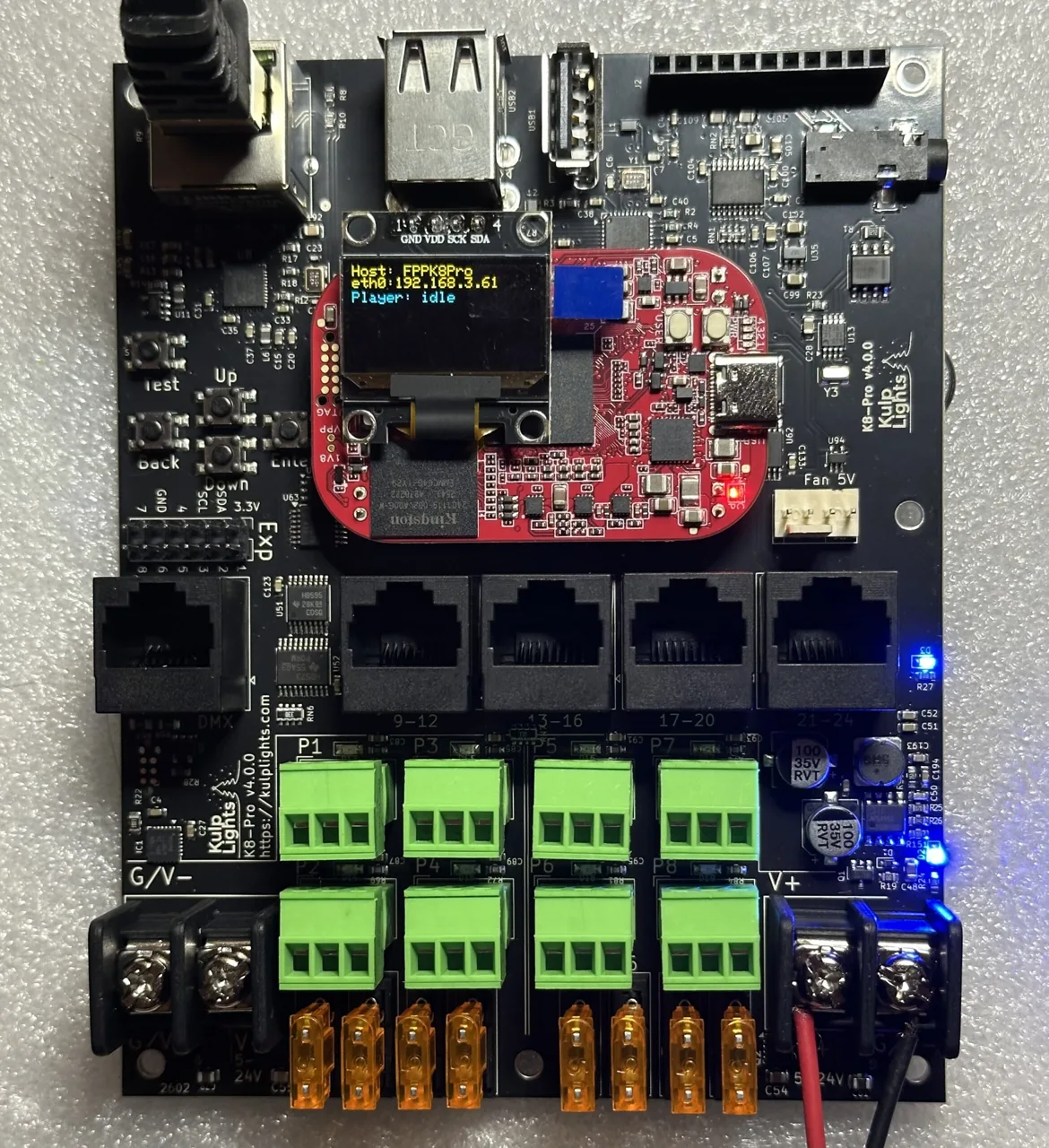
K8-Pro
-
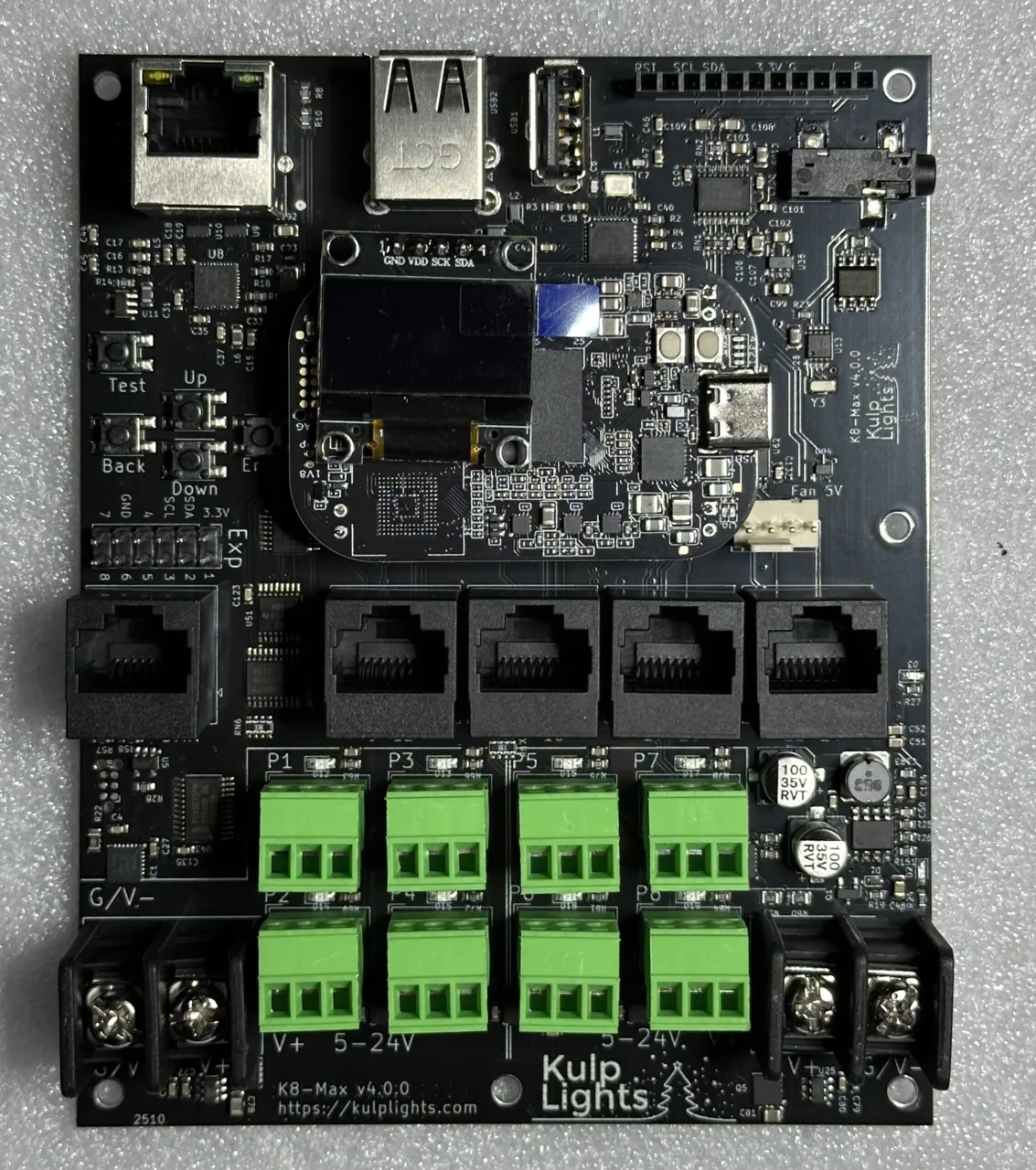
K8-Max
-
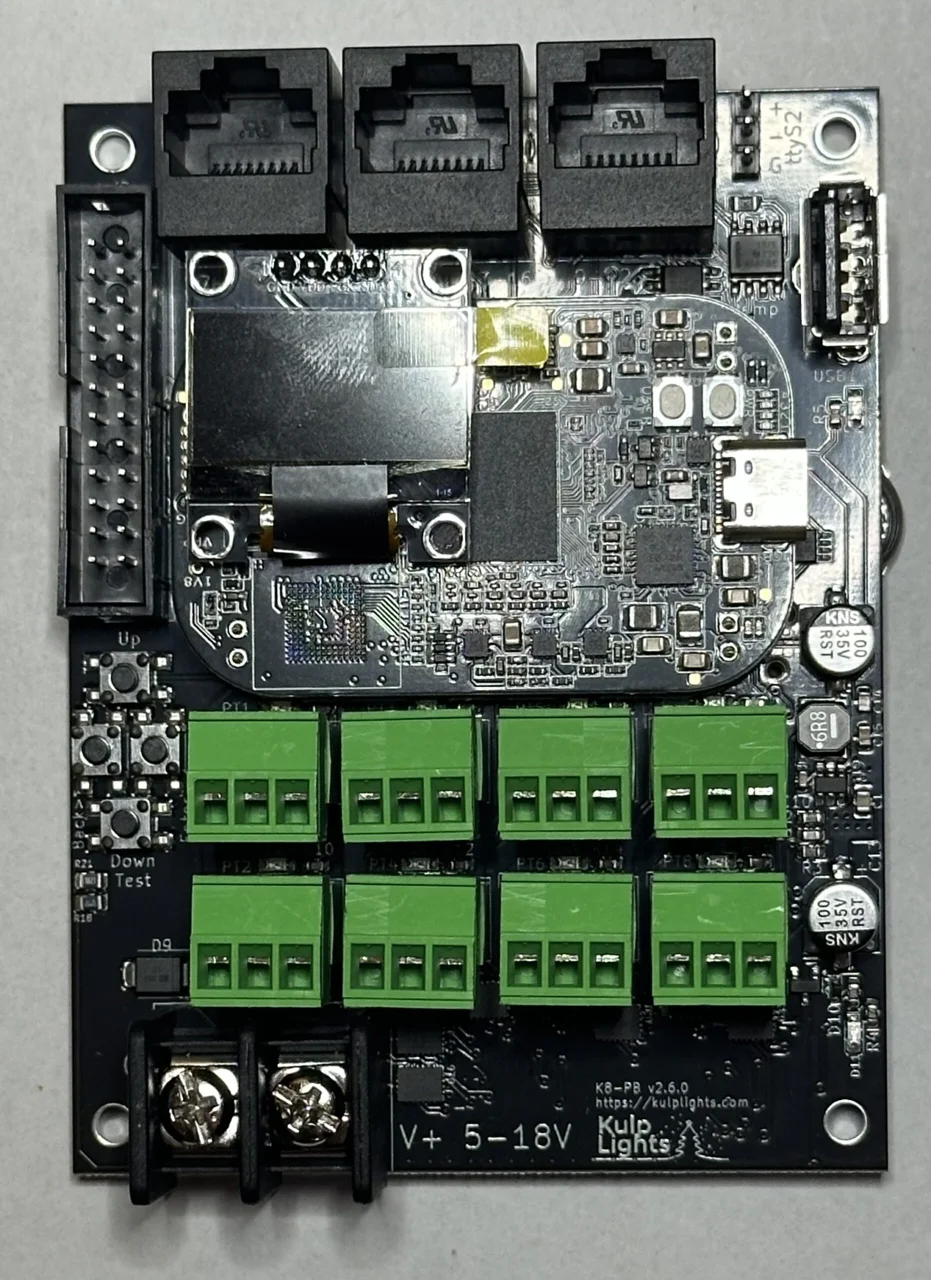
K8-PB
-
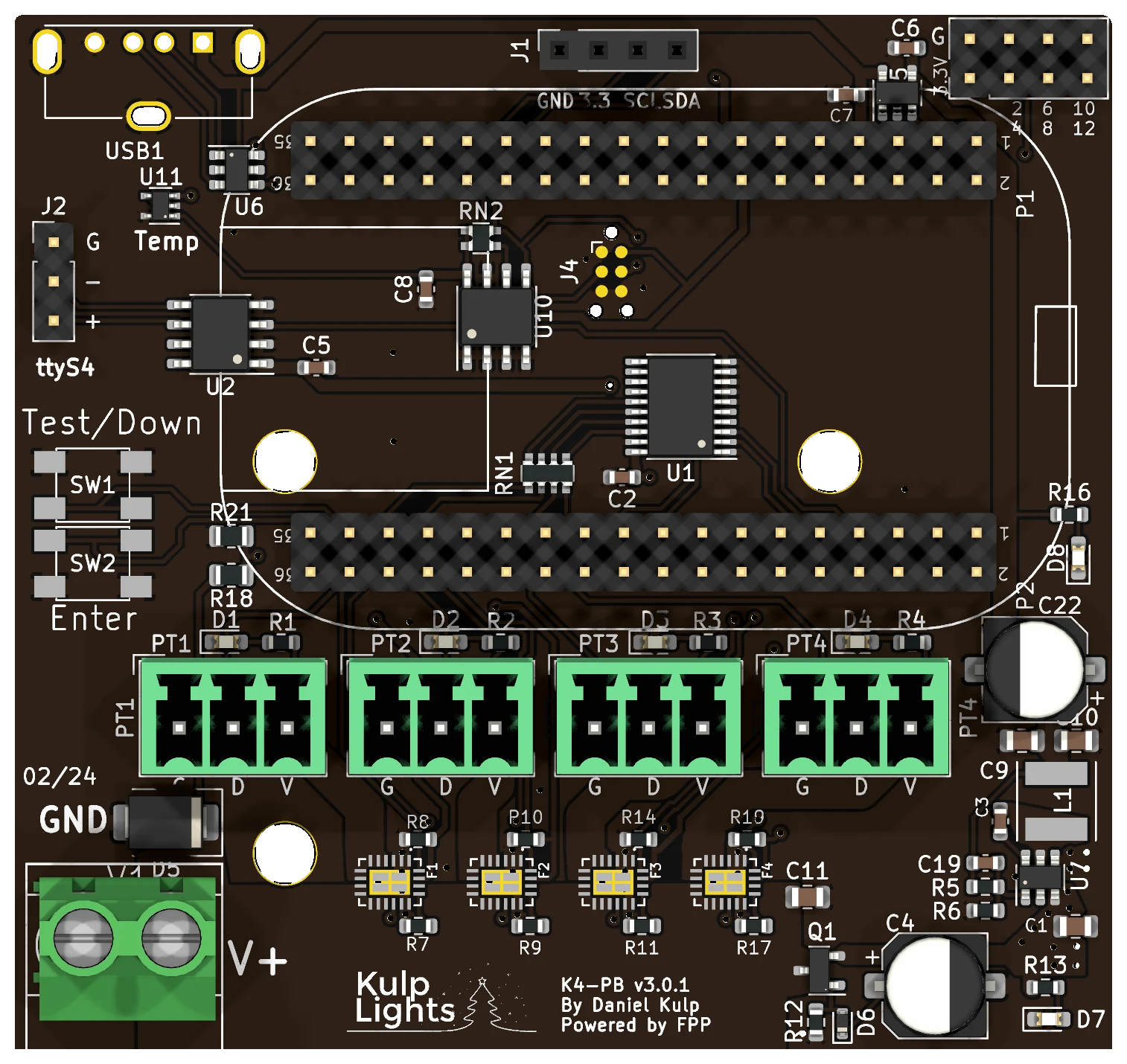
K4-PB (rendering)
-
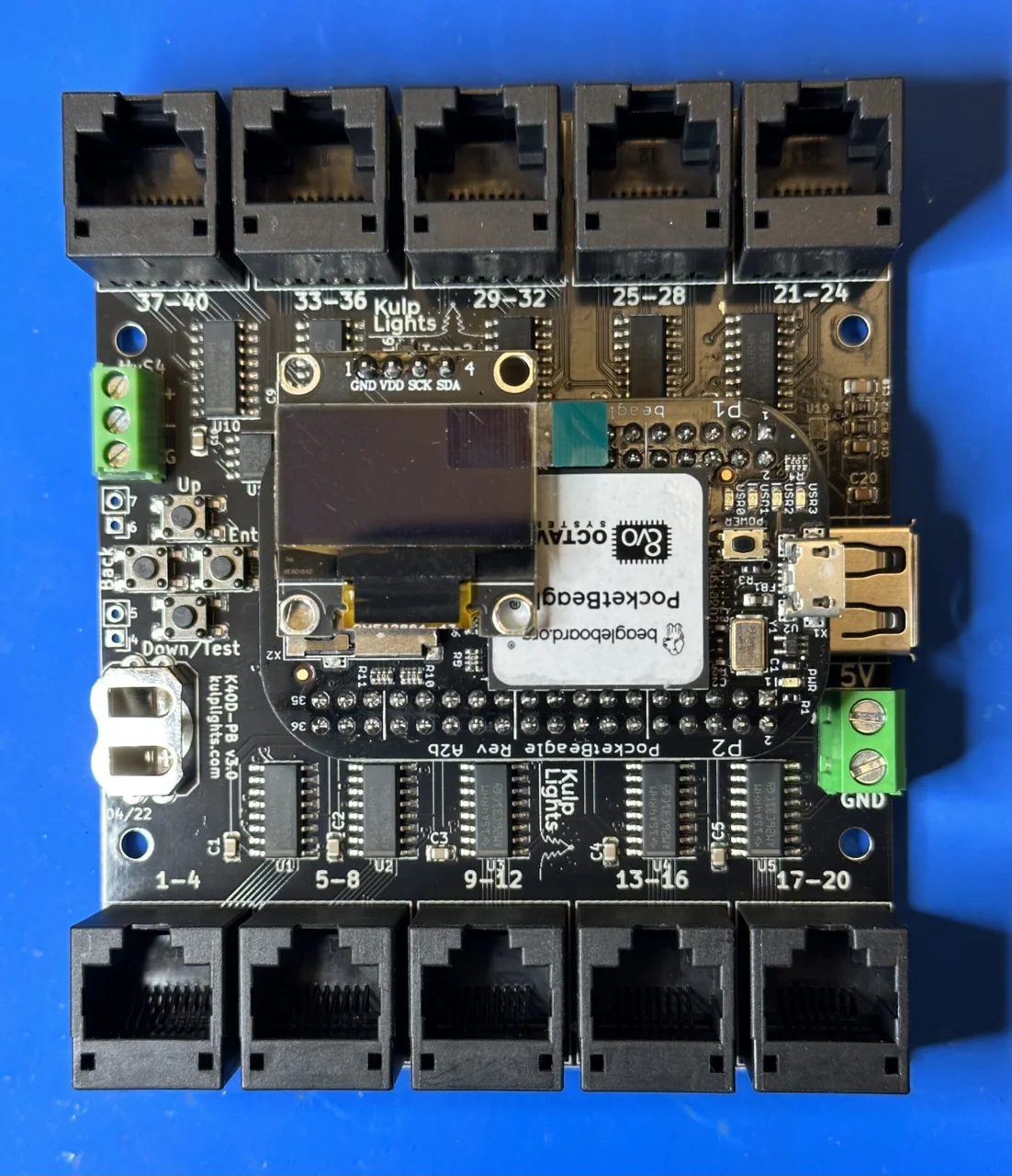
K40D-PB
-
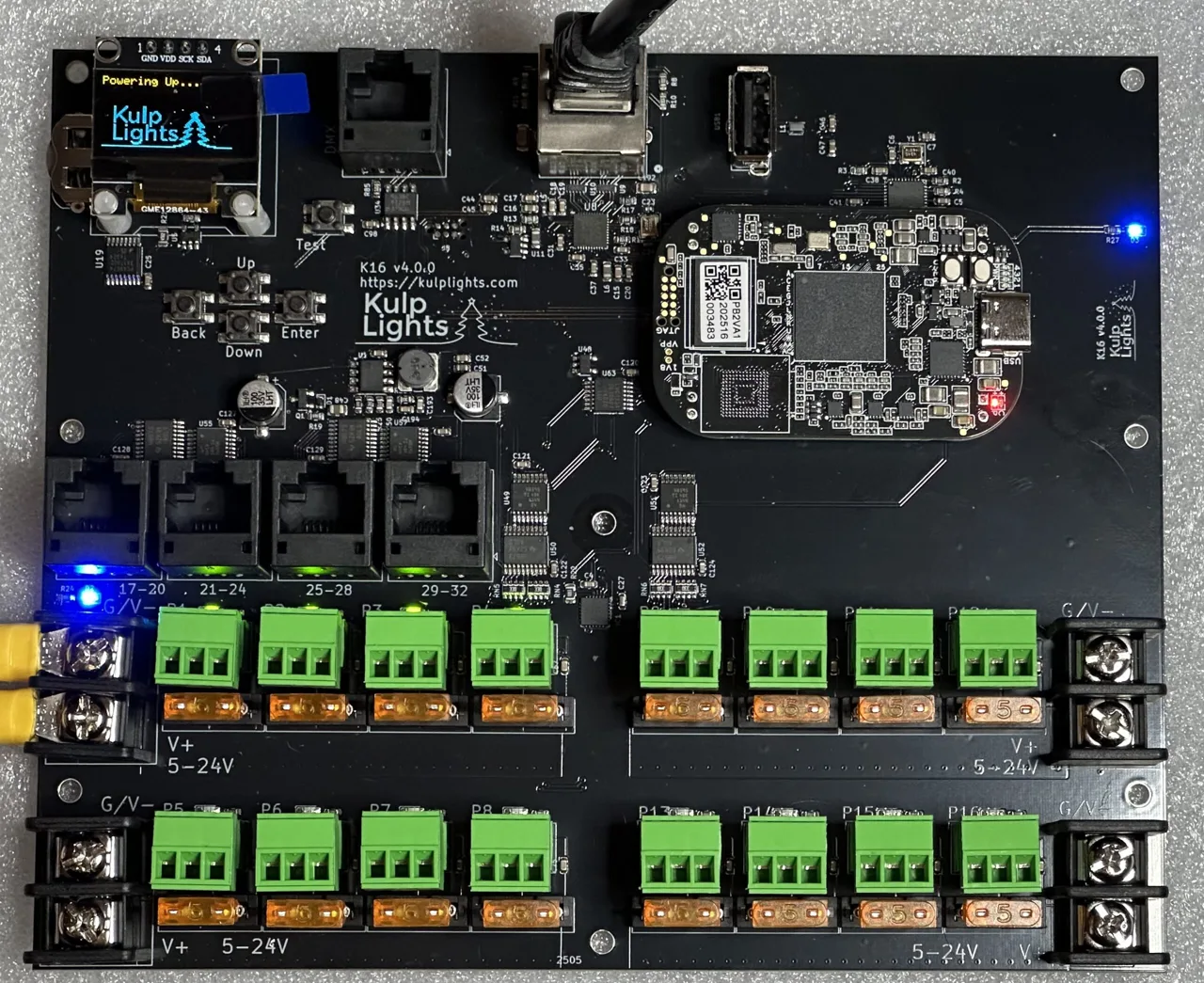
K16
-
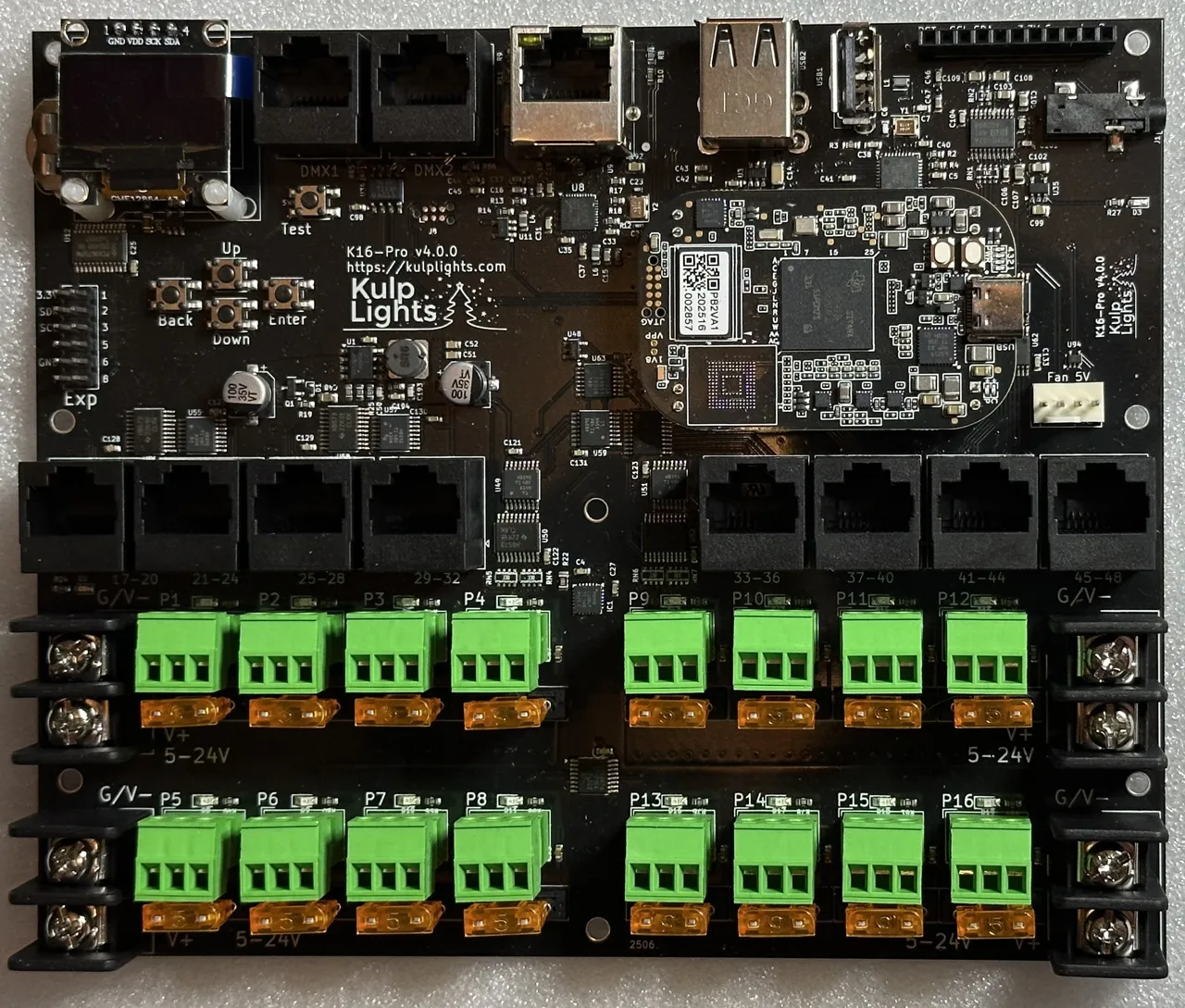
K16-Pro
-
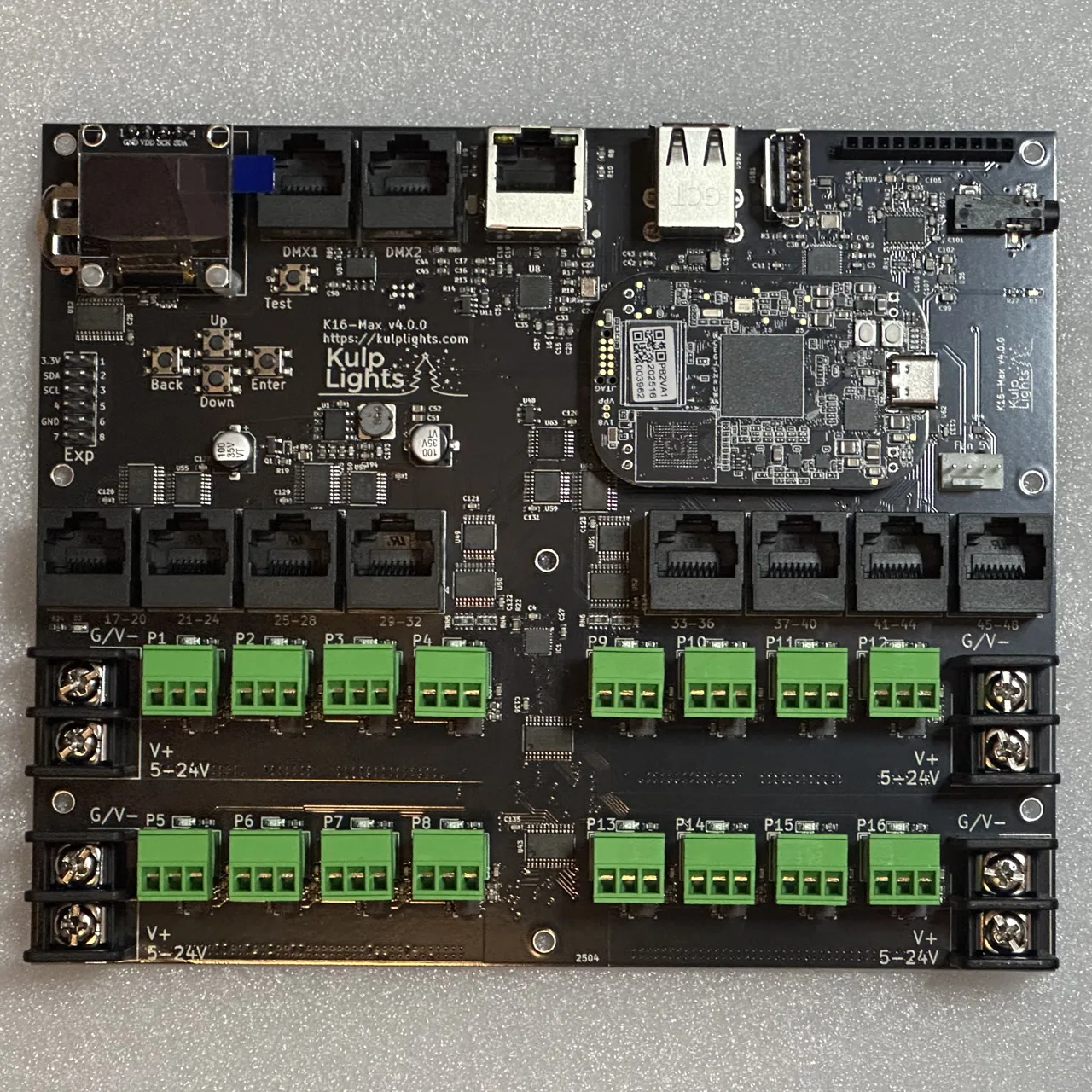
K16-Max
-
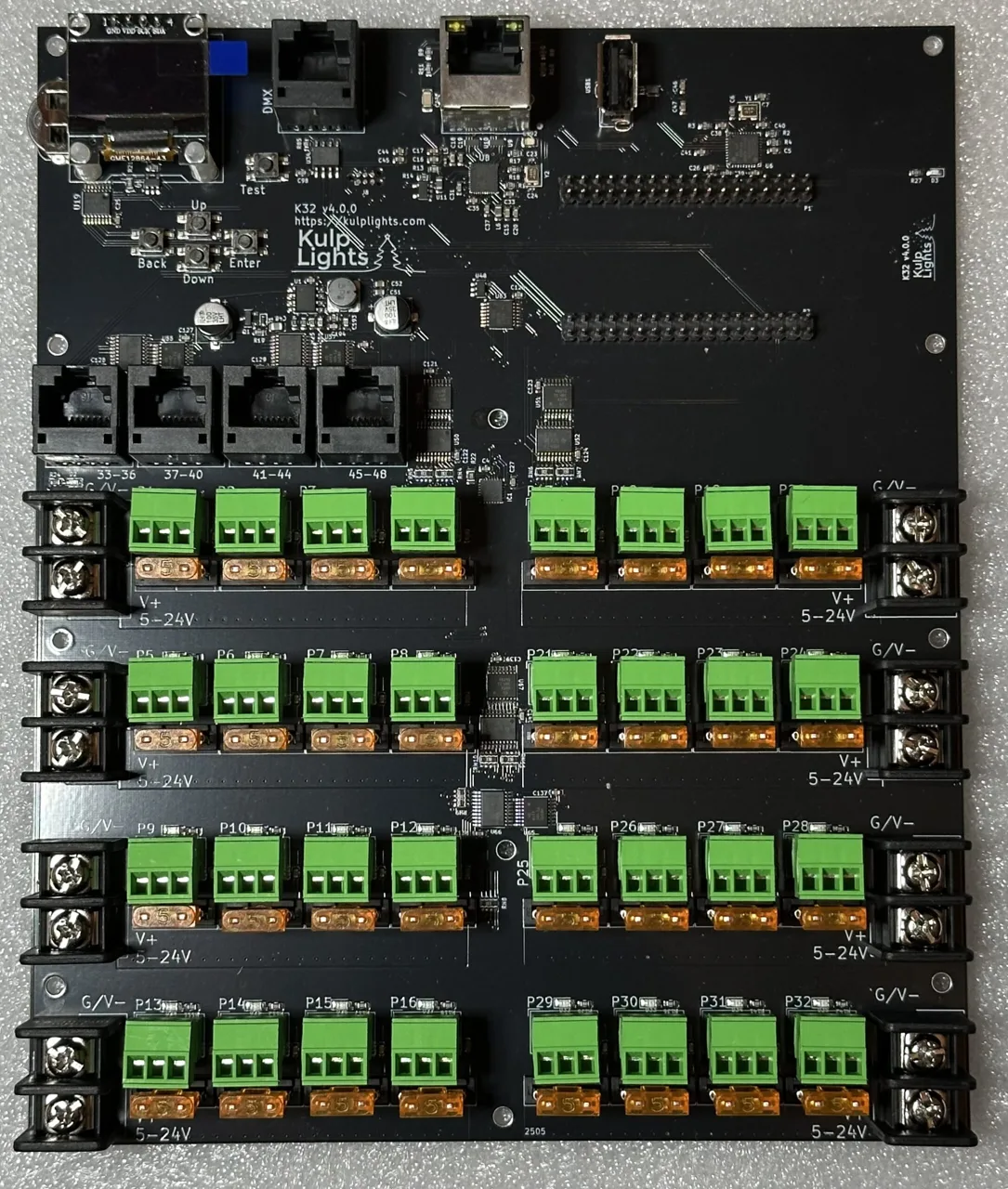
K32
-
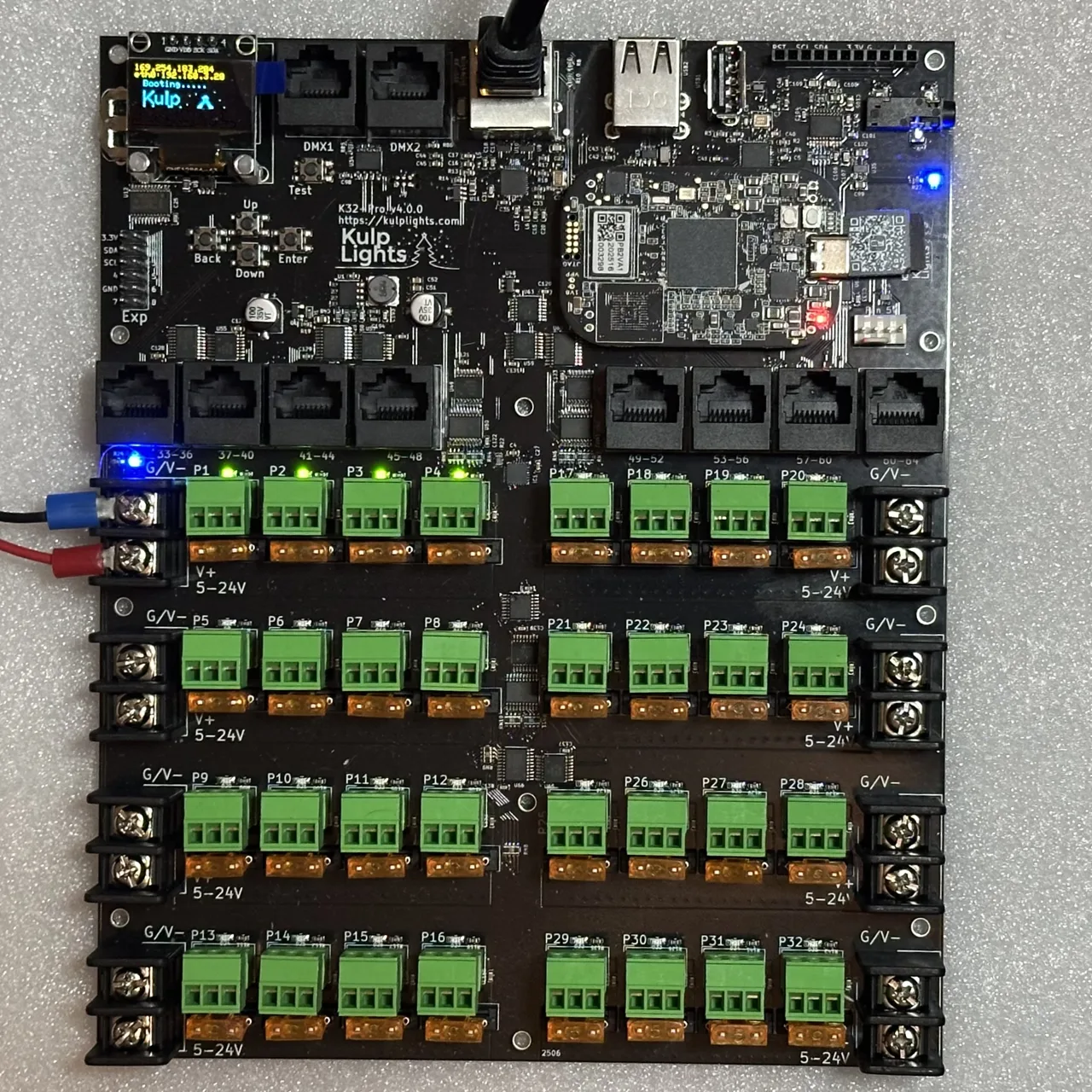
K32-Pro
-
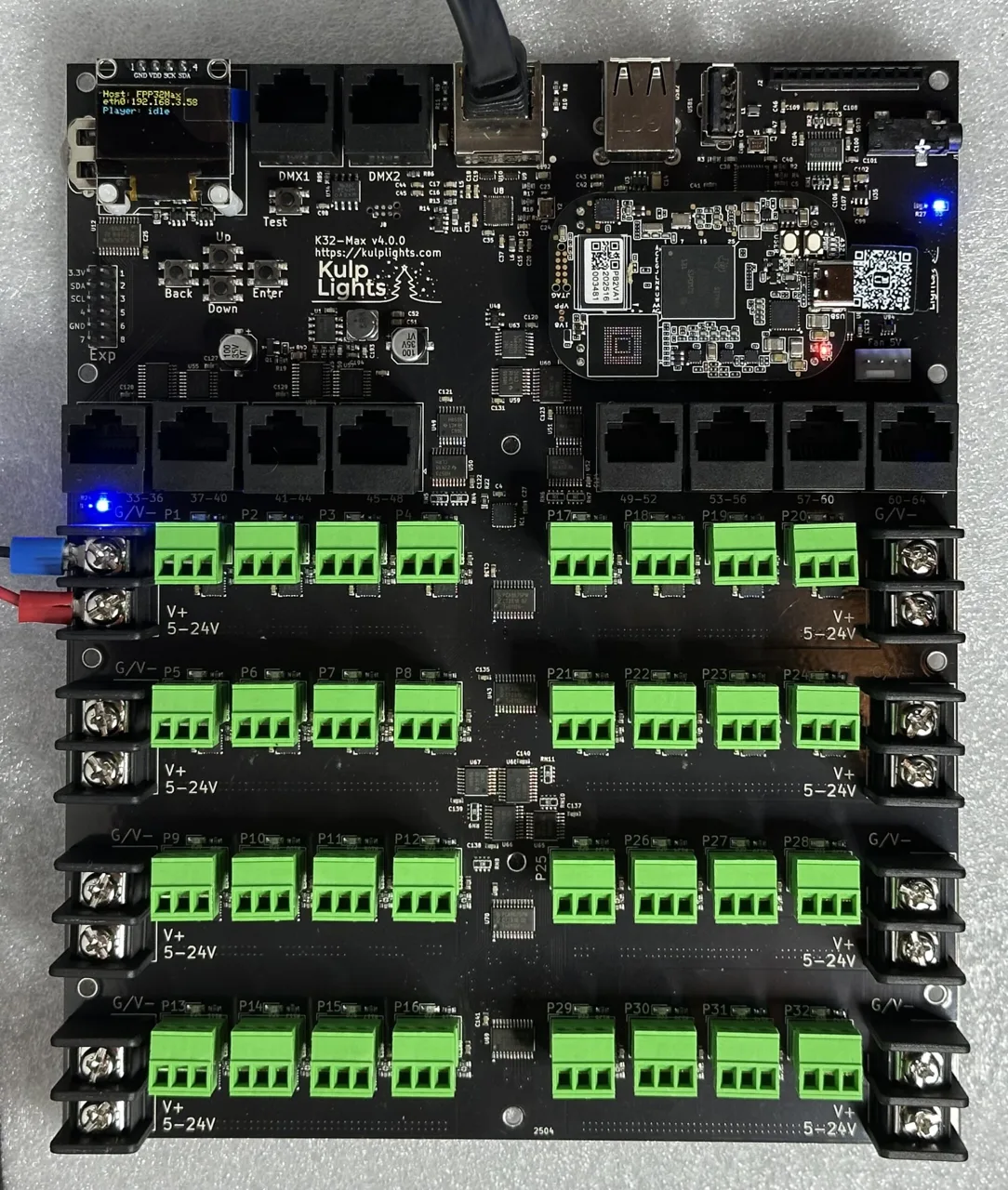
K32-Max
-
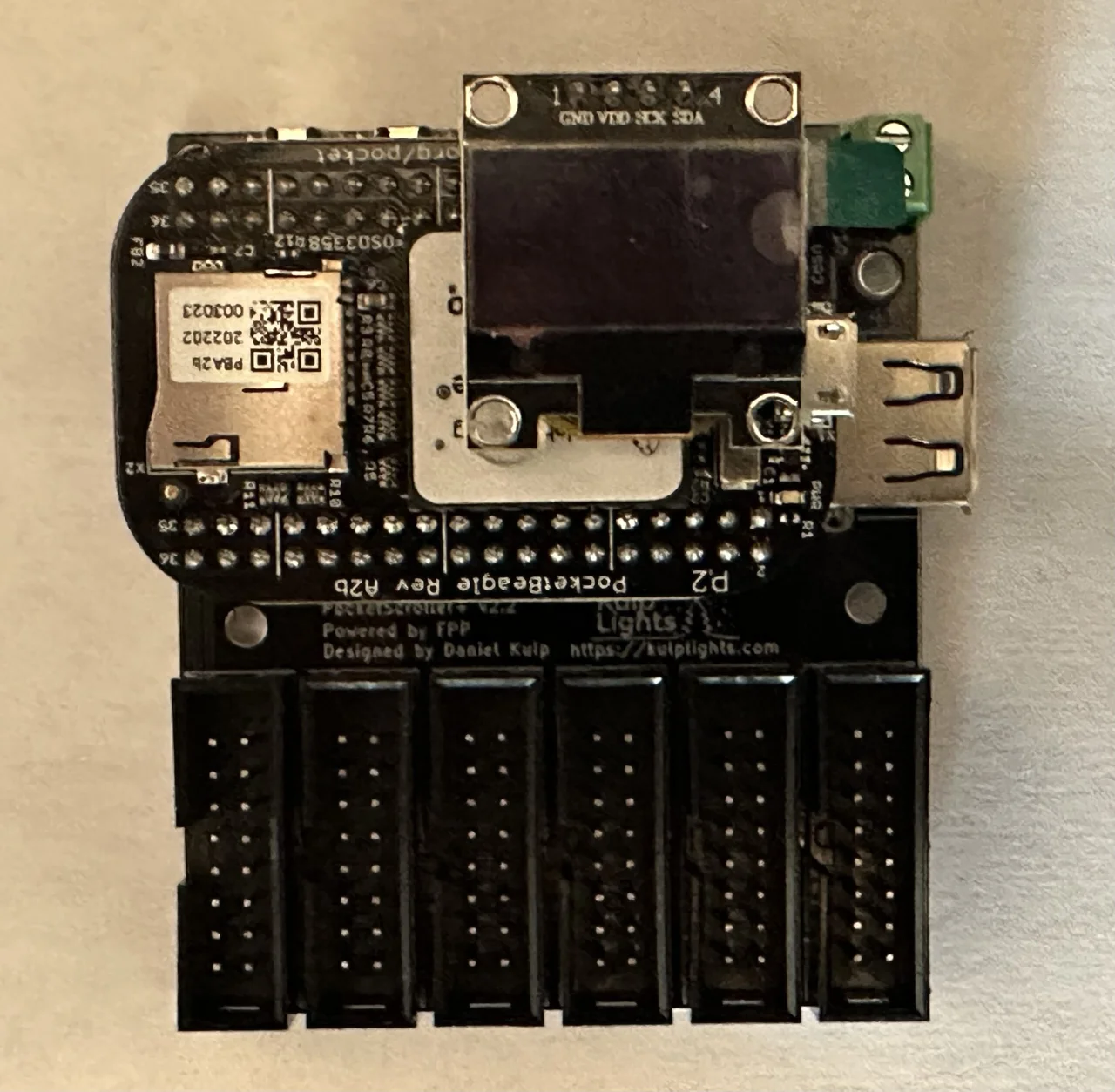
PocketScroller v2
-
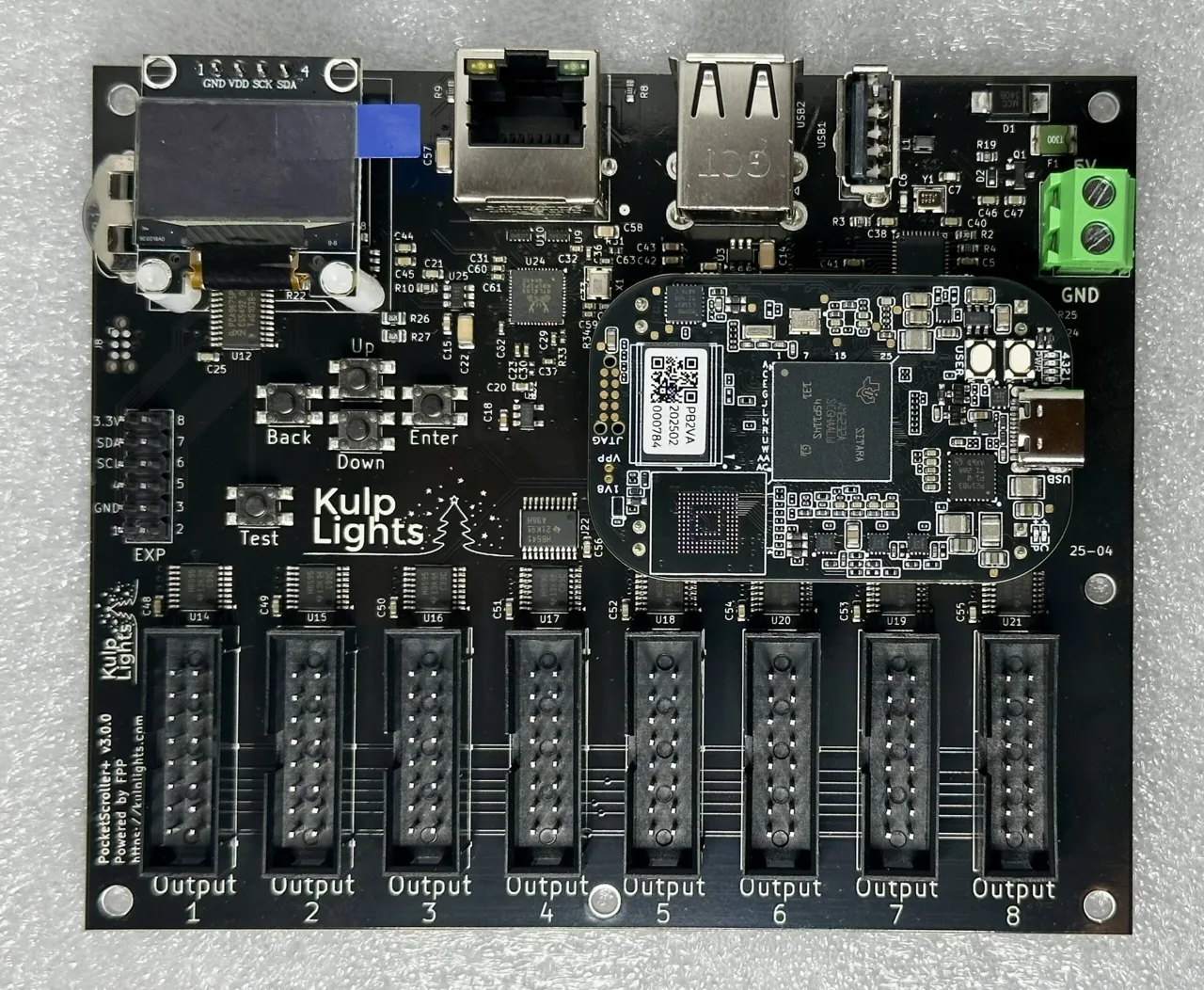
PocketScroller v3
-
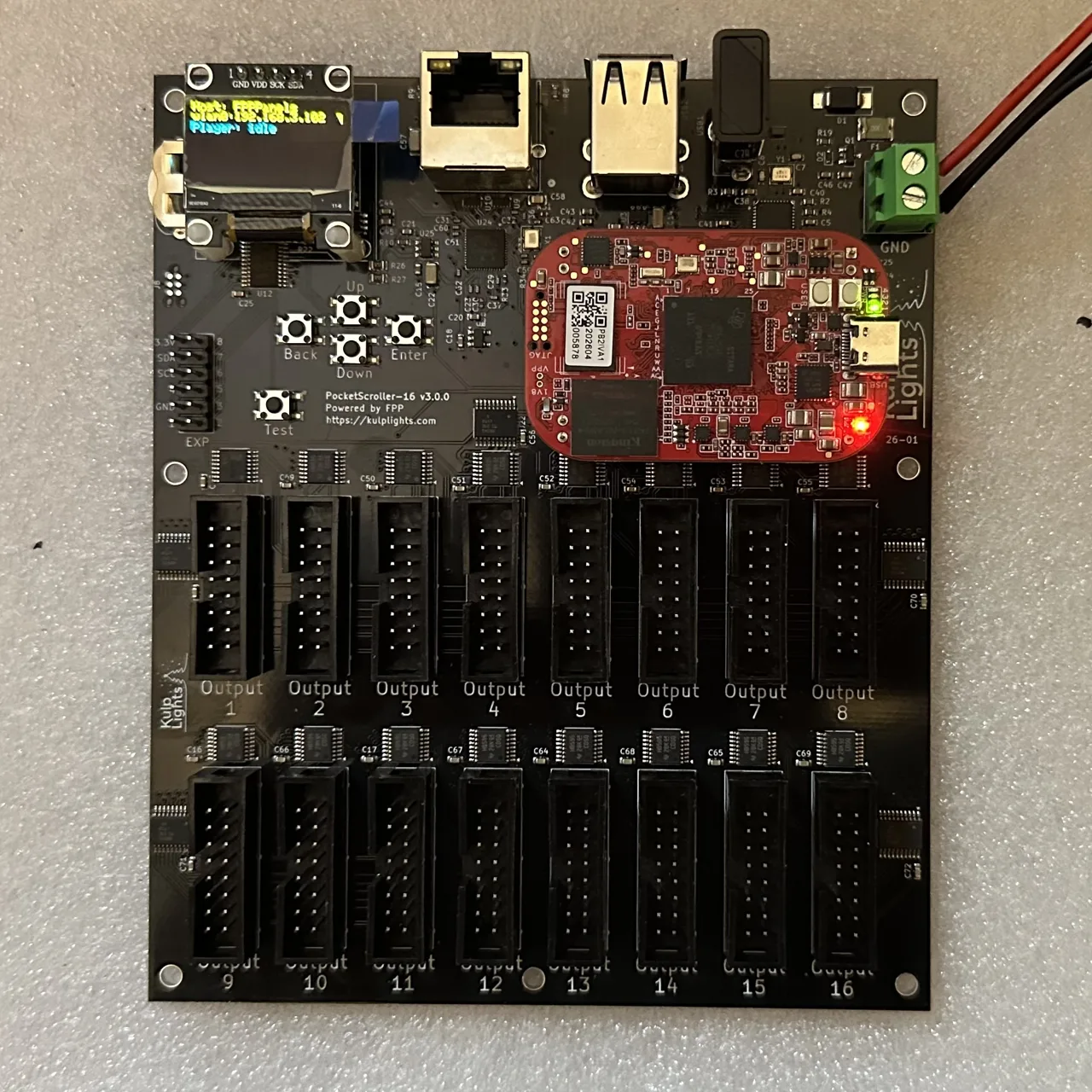
PocketScroller-16
-
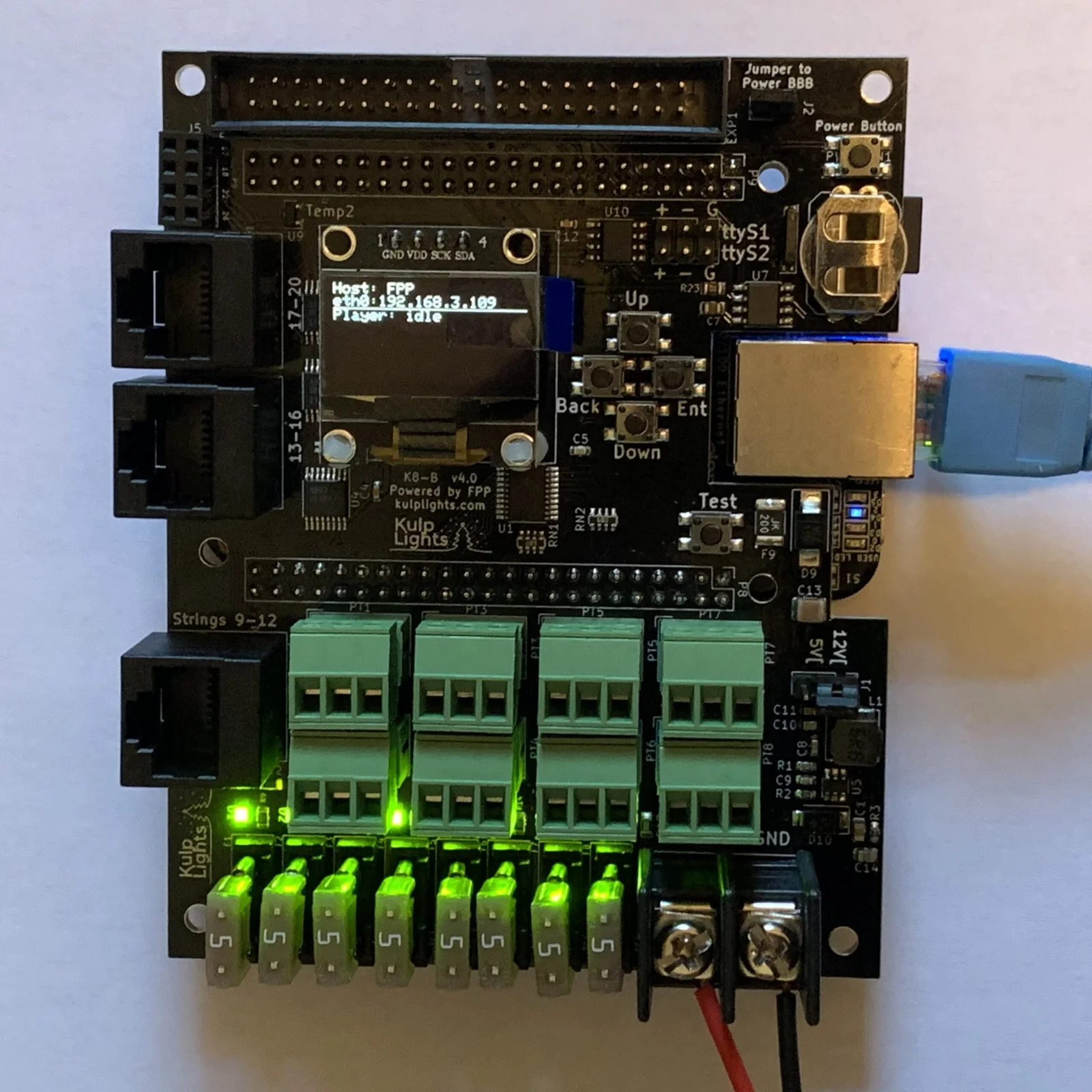
K8-B
-
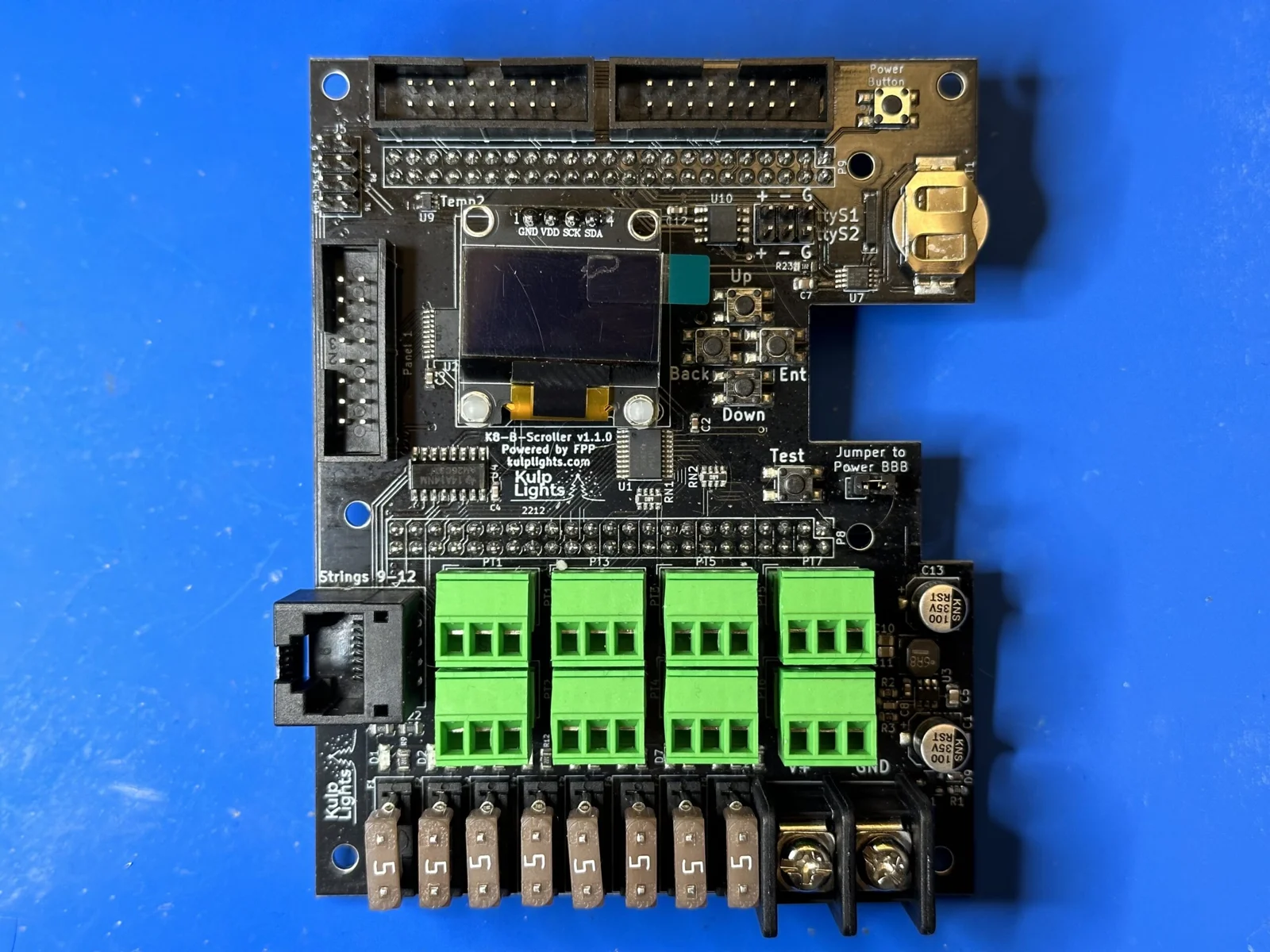
K8-B-Scroller
-
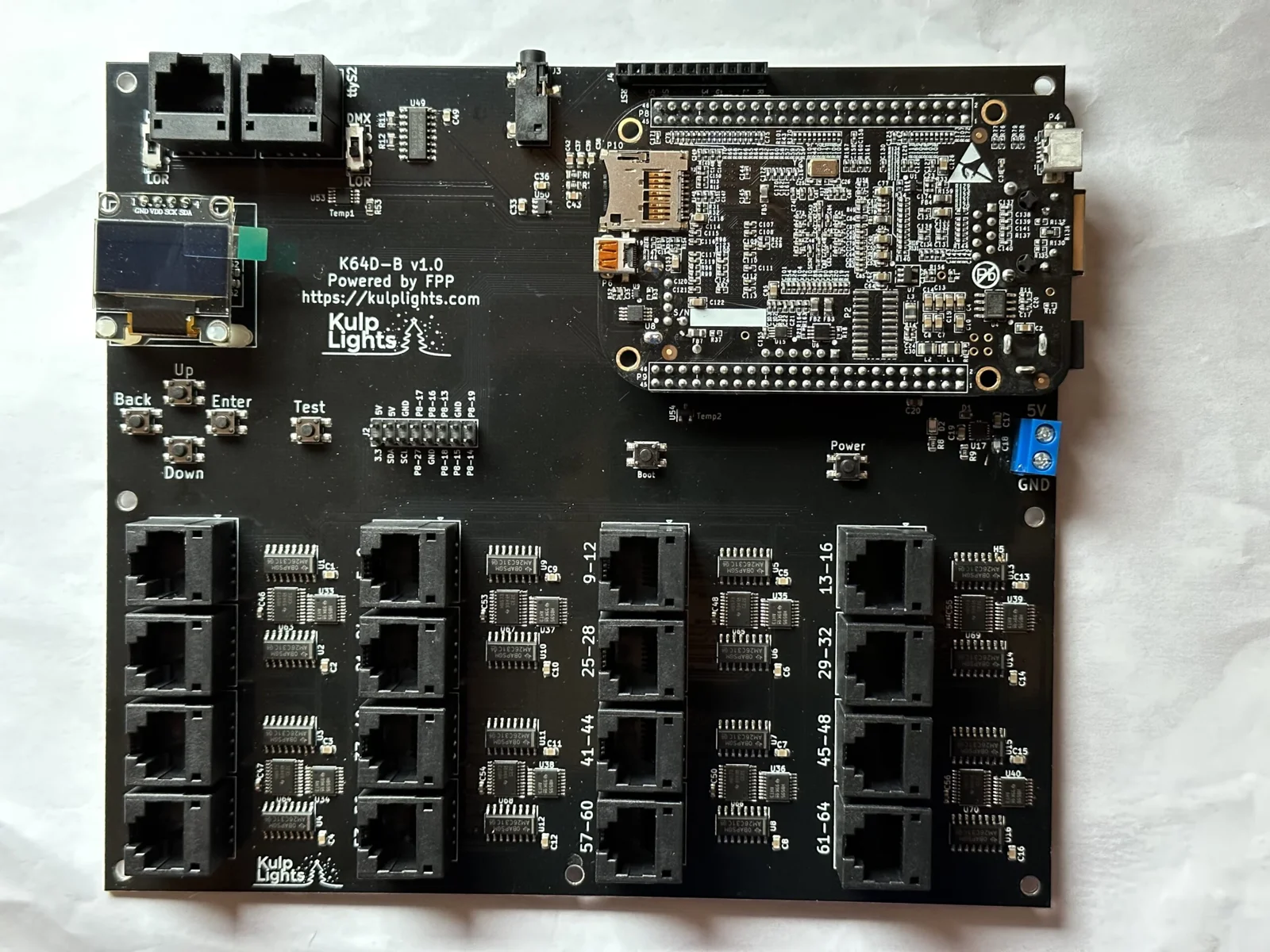
K64D-B
-
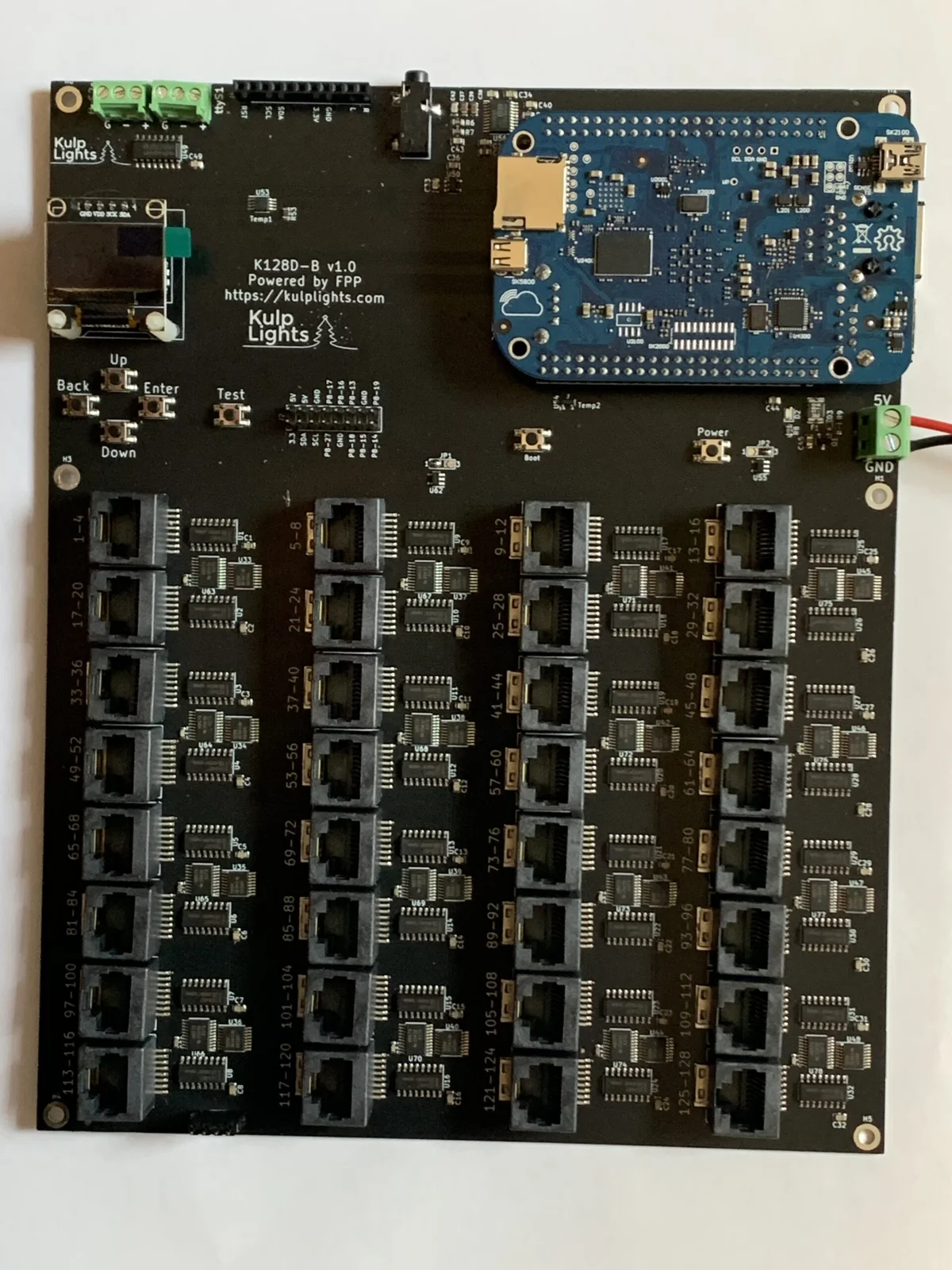
K128D-B
-
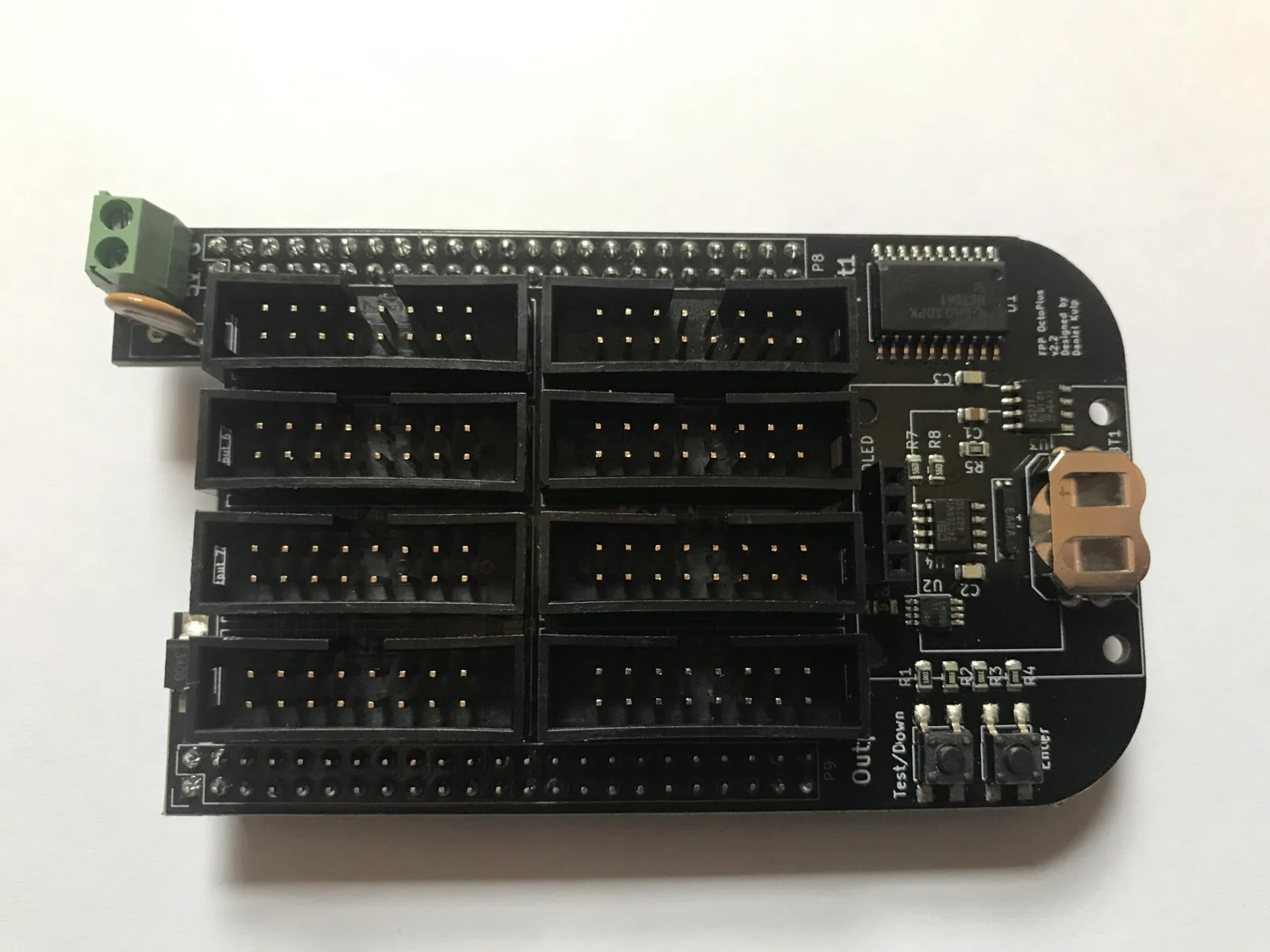
OctoPlus
-
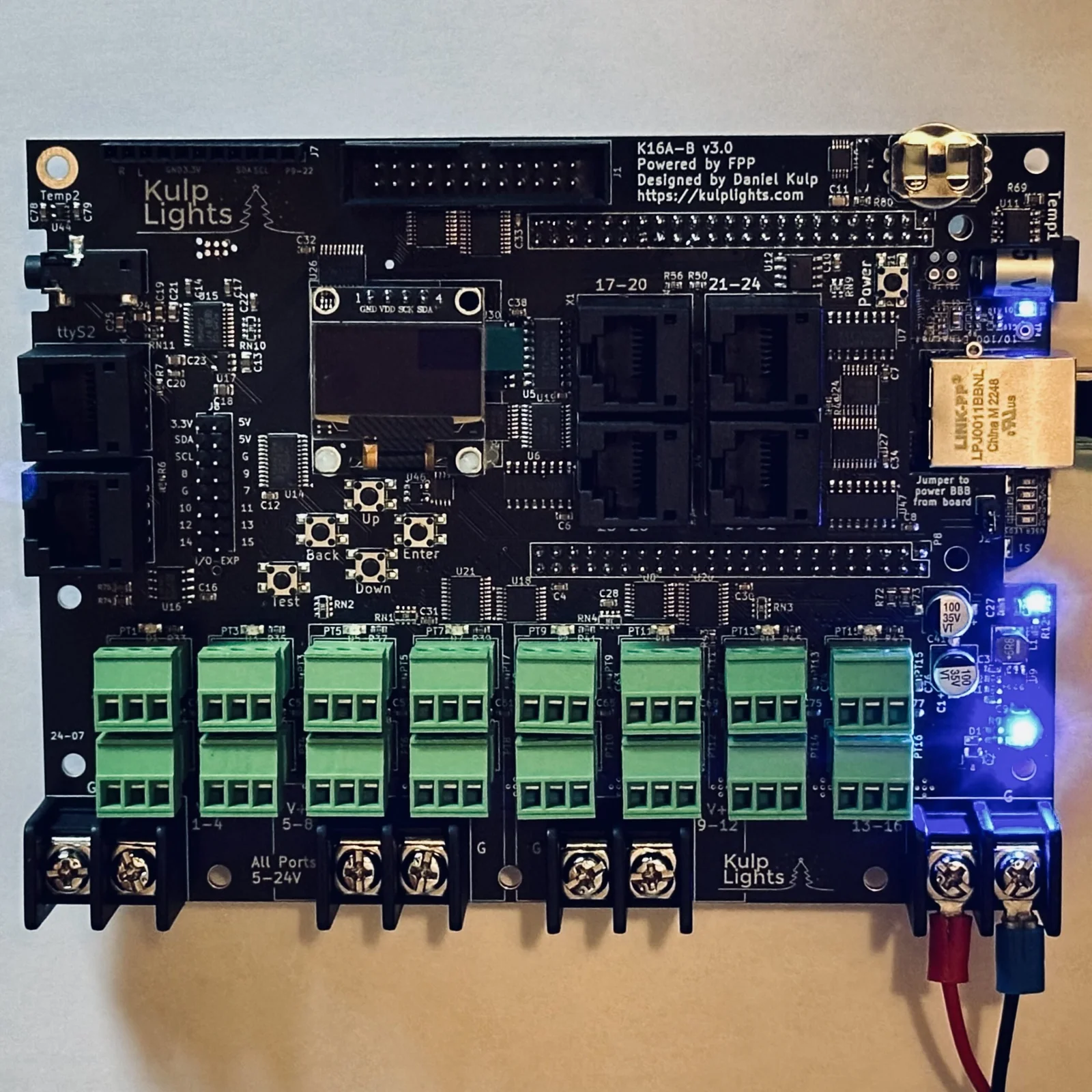
K16A-B (retired)
-
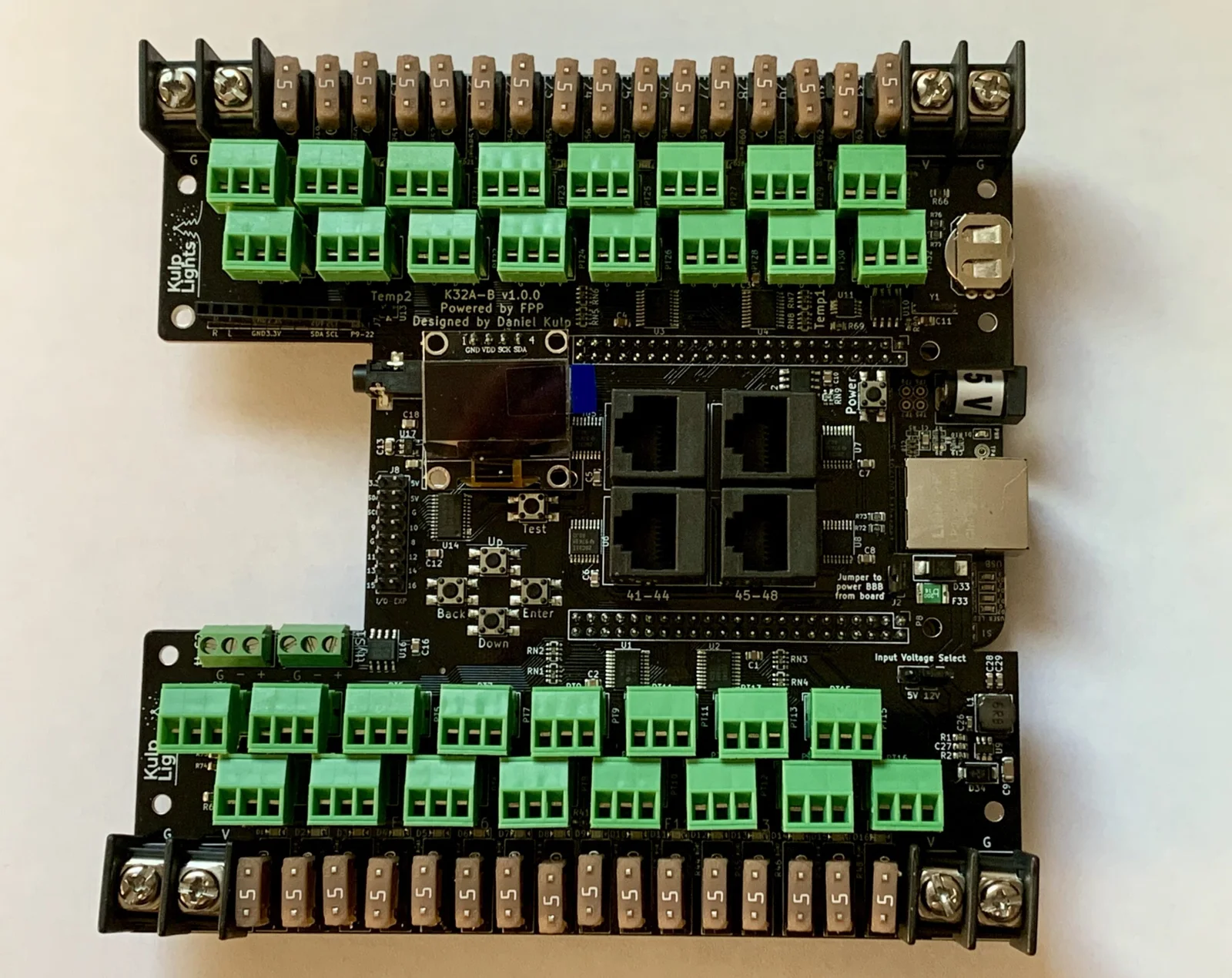
K32A-B (retired)
-
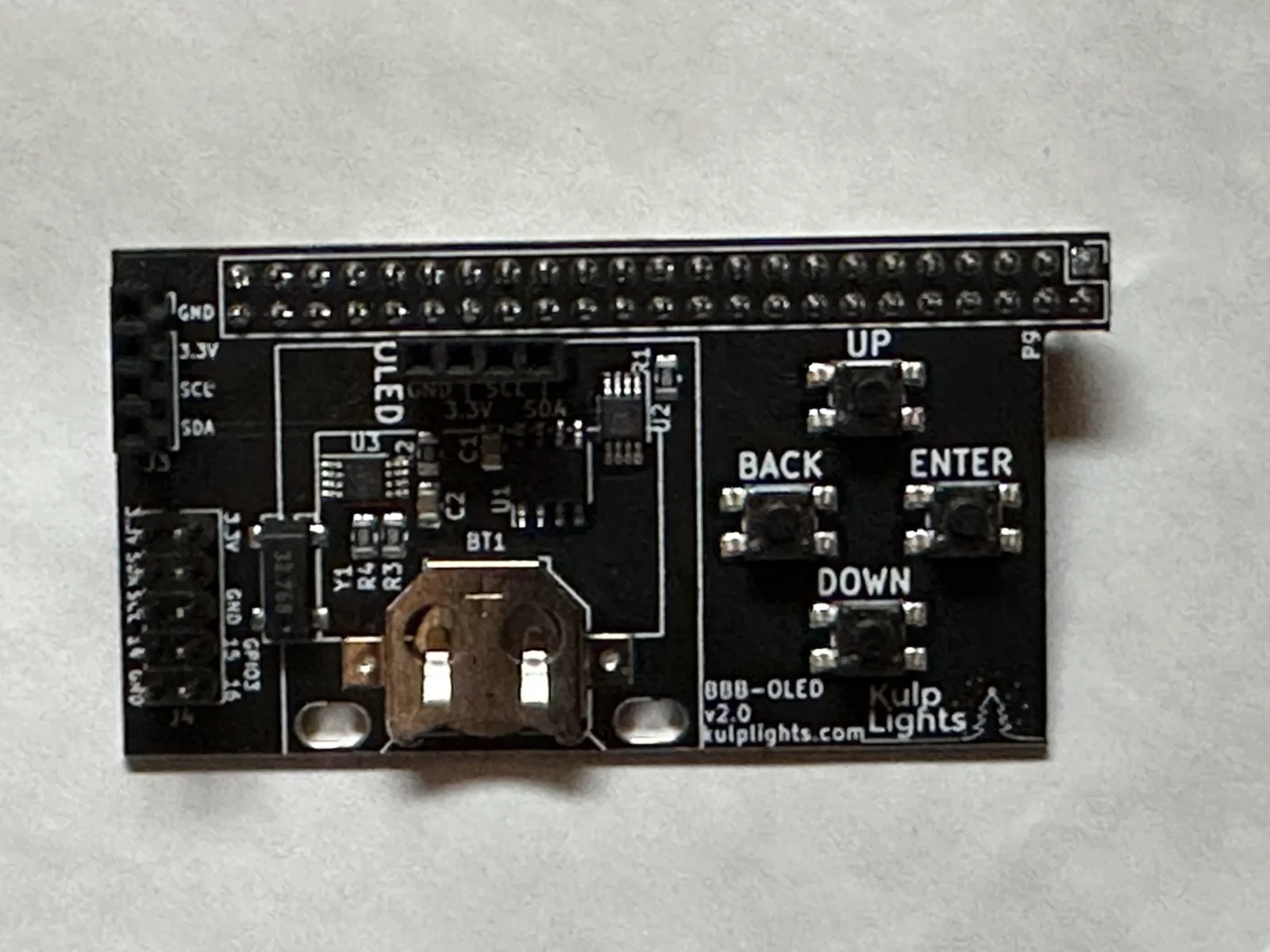
BBB-OLED
-
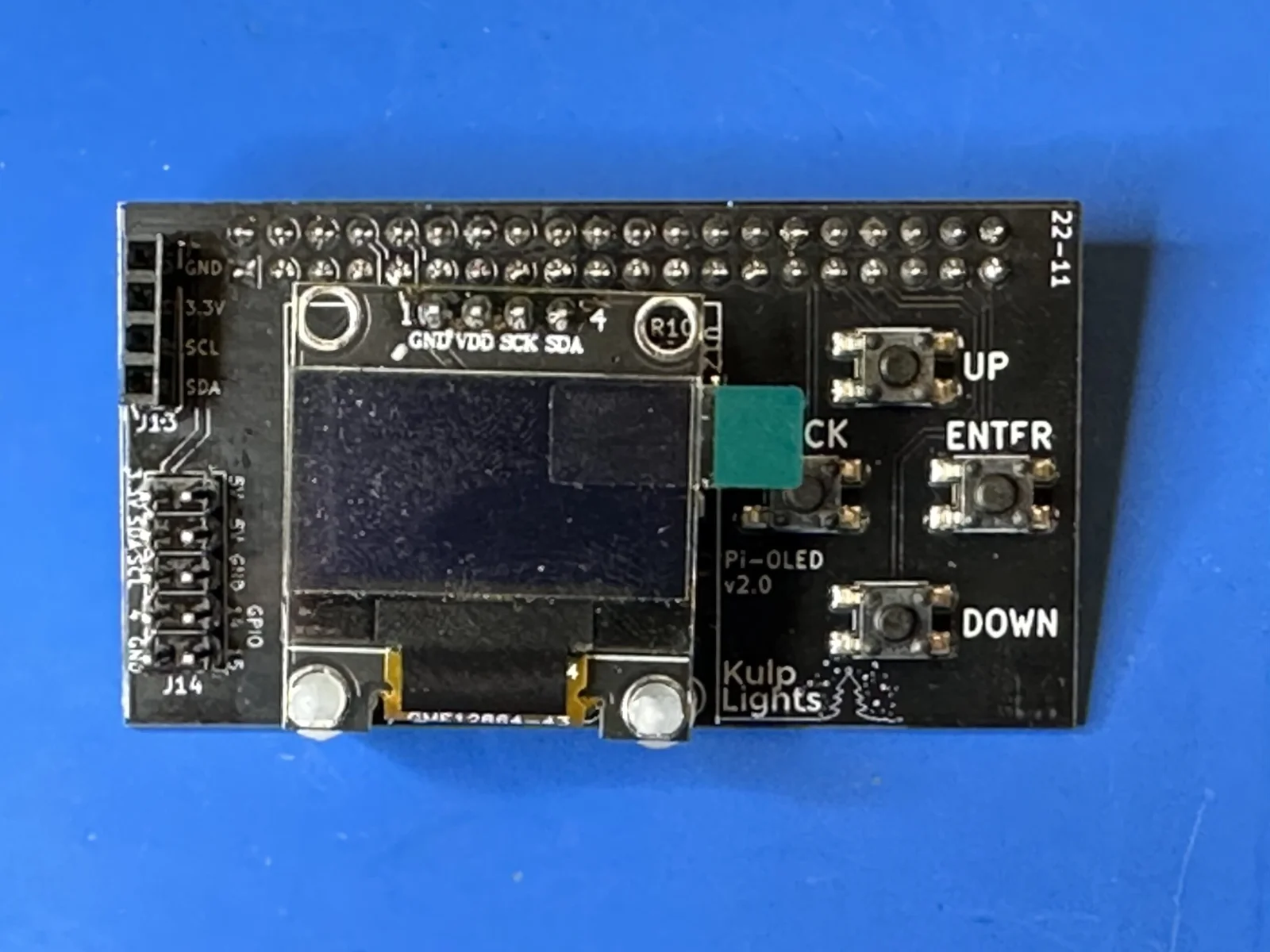
Pi-OLED 2.0
-
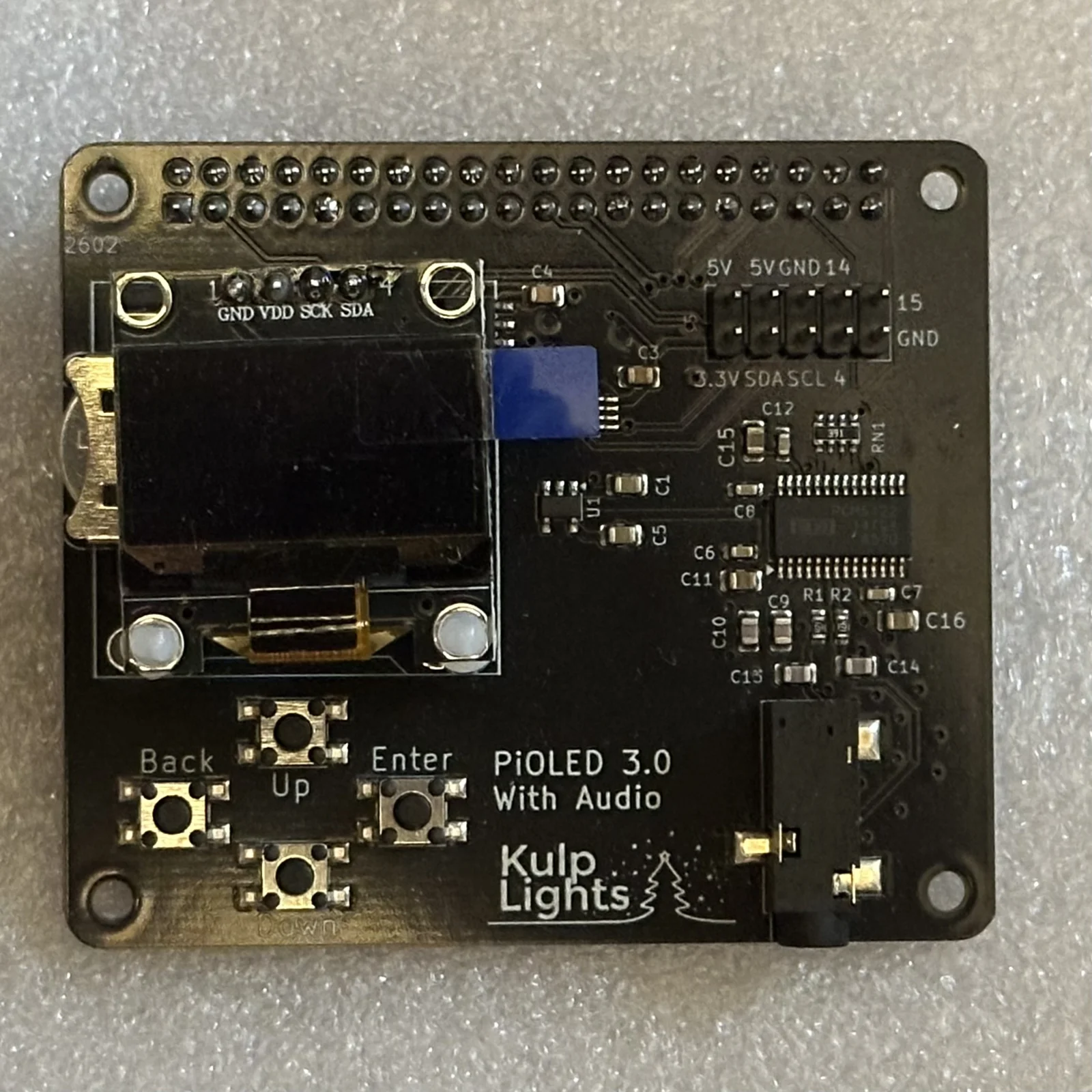
PiOLED 3.0 With Audio
-
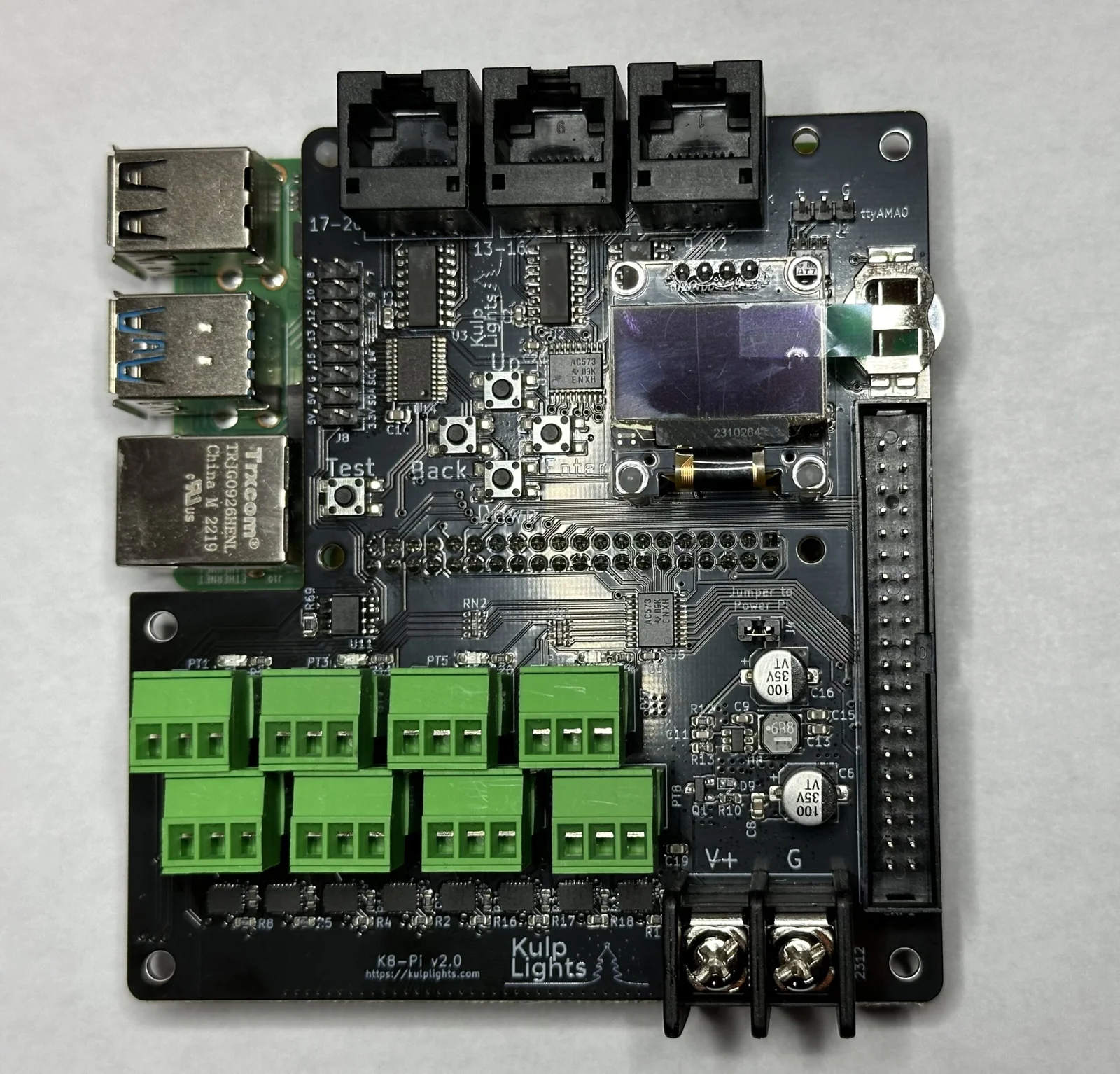
K8-Pi
-
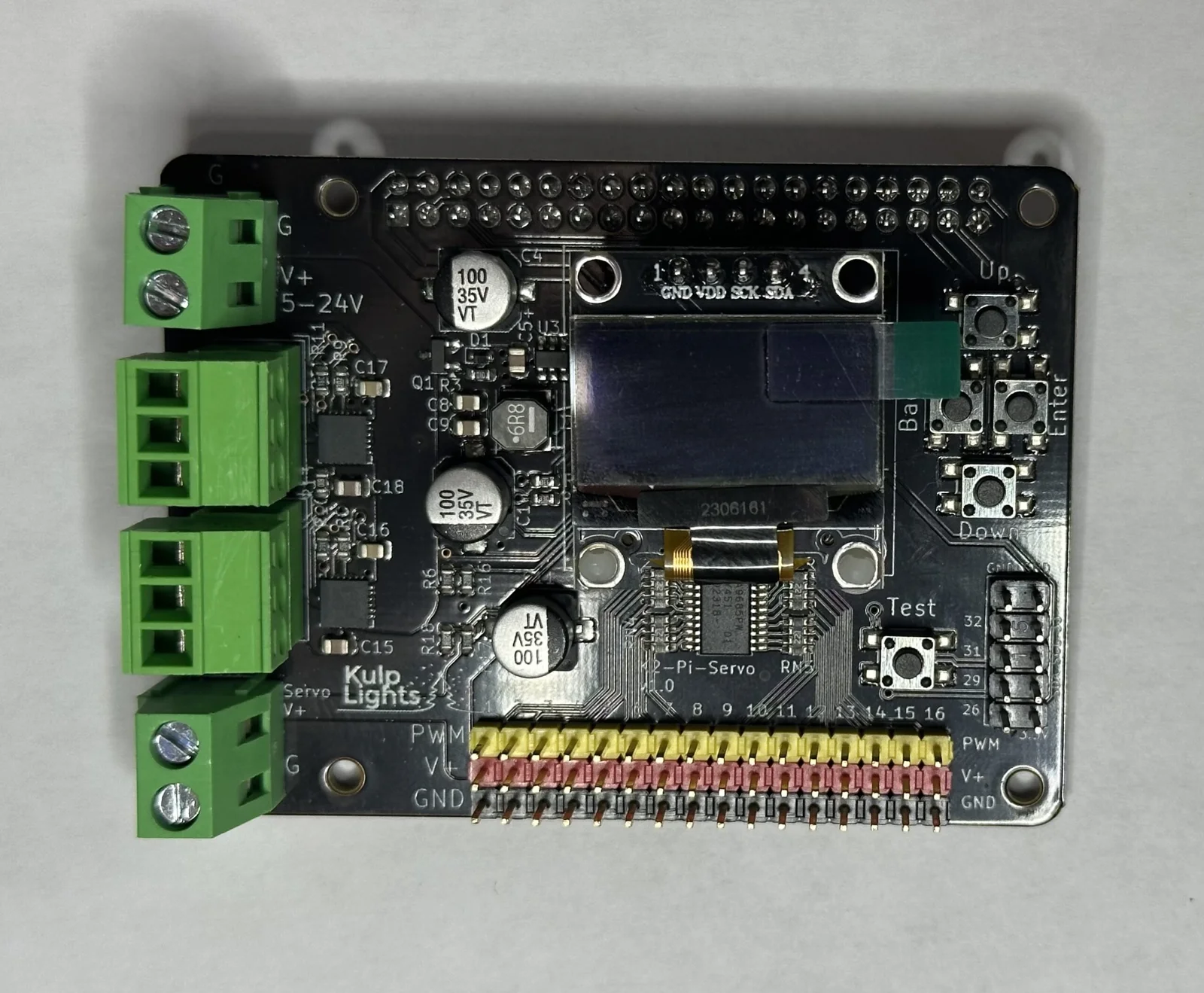
K2-Pi-Servo
-
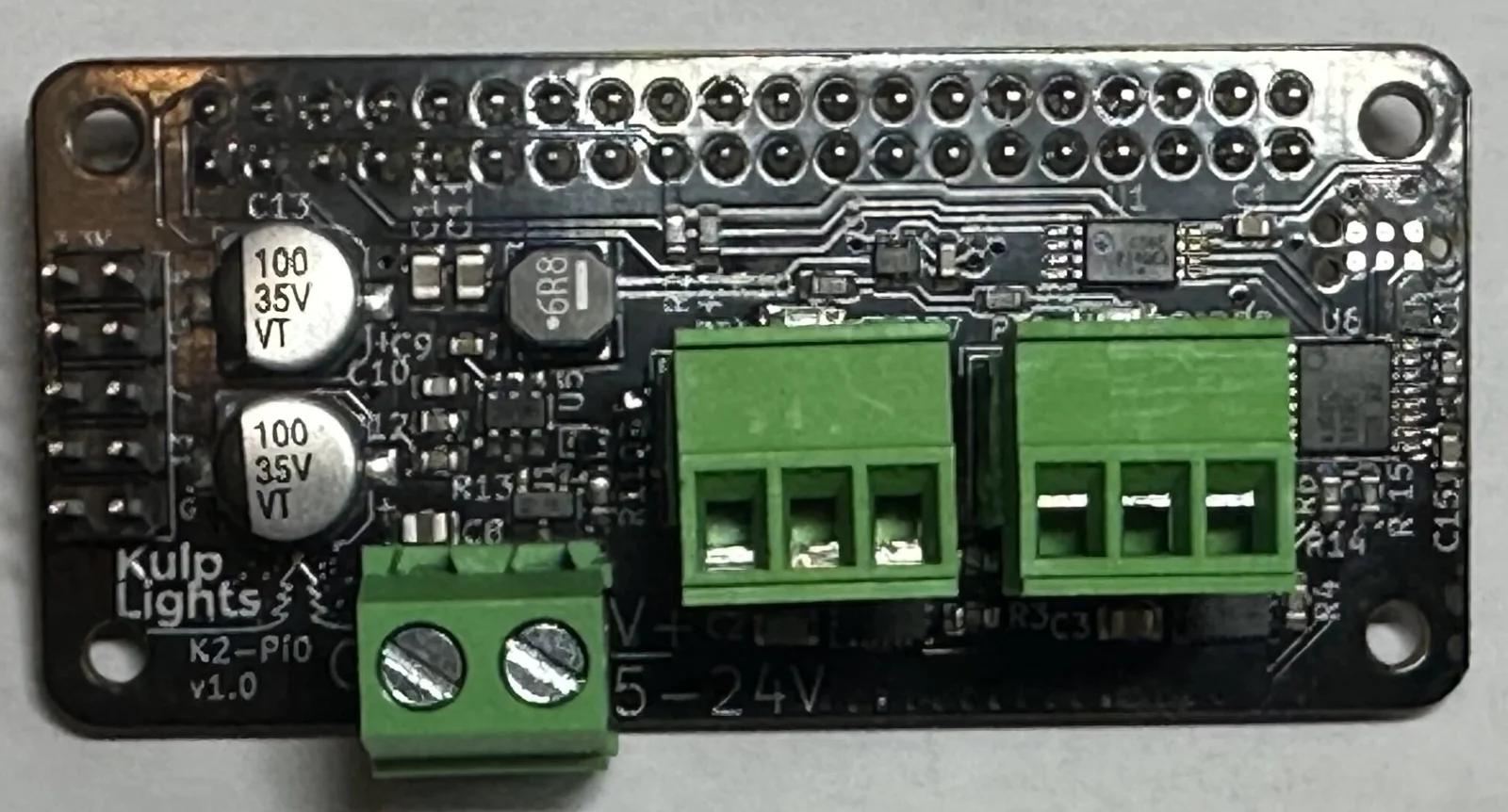
K2-Pi0
For a feature-by-feature comparison, see Boards.